Featured Papers
Lawrenz Lab trainees are in bold
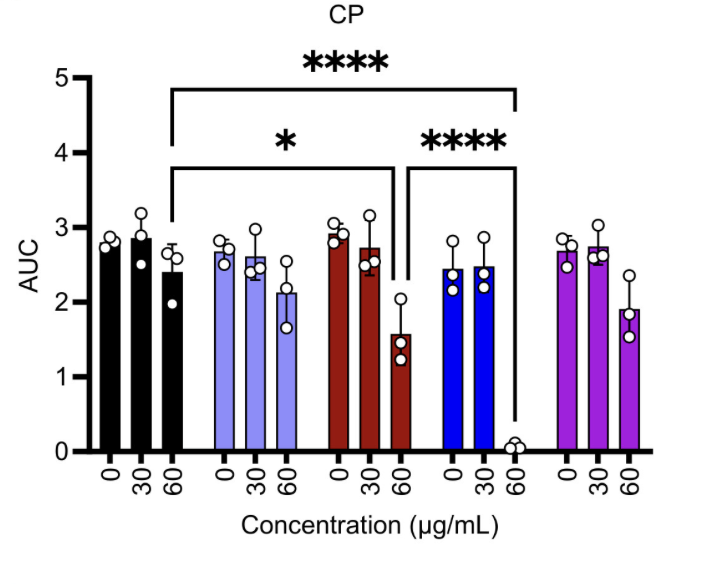
Yersinopine is a primary zinc acquisition system for Yersinia pseudotuberculosis
M. Kadari, C. Weber, T.E. Kehl-Fie, R.D. Perry, J.C. Ortiz-Marquez, O.V. Tsodikov, S. Garneau-Tsodikova, and M.B. Lawrenz
mBio. 2026 Sep 17:e0200026. doi: 10.1128/mbio.02000-26.
We show that the opine metallophore yersinopine promotes fitness during calprotectin-mediated zinc starvation and is a critical virulence factor in Y. pseudotuberculosis infection. We further show that yersinopine does not support zinc uptake in Y. pestis, revealing a previously unrecognized evolutionary divergence in metal acquisition strategies among closely related Yersinia species.
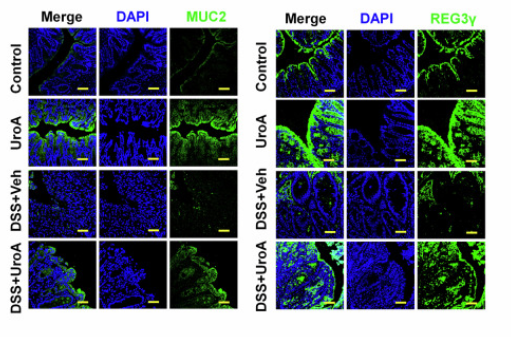
Urolithin A activates aryl hydrocarbon receptor-NLRP6-mediated pathways in intestinal epithelial cells to modulate mucosal immunity and strengthen gut barrier integrity
S. Ghosh, Z.M. Vanwinkle, S.R. Bodduluri, S.K. Juin, M. Kadari, A. Singh, G.W. Dryden, M.B. Lawrenz, T. Kanneganti, S.N. Rai, M. Good, P. Kumar, B. Haribabu, and V.R. Jala
Nat Commun. 2026 Jun 23;17(1):5411. doi: 10.1038/s41467-026-73760-3. PMID: 42336837
We demonstrate that selective activation of the aryl hydrocarbon receptor in epithelial cells by the microbial metabolite urolithin A induces NLRP6-dependent secretion of IL-18, leading to IL-22 production from ILC3 cells to restore gut homeostasis and mitigate colitis in mice.
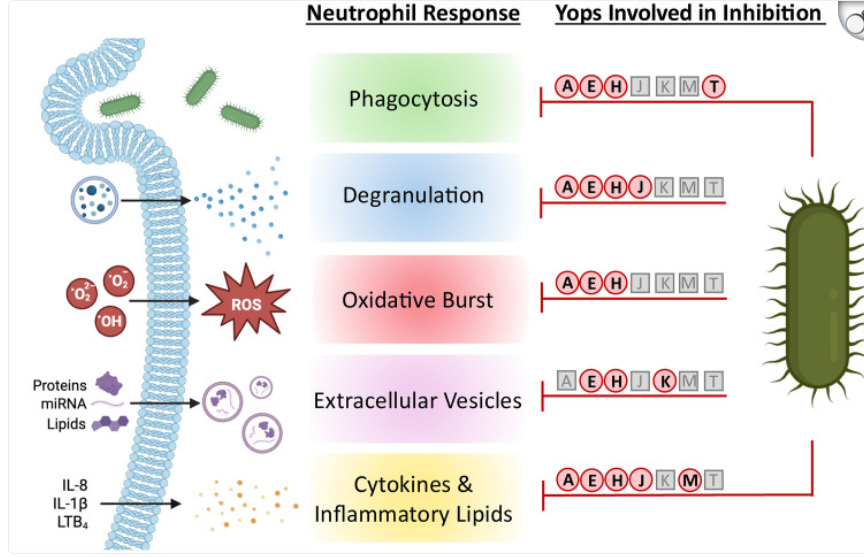
Strategies in immune subversion: How Yersinia pestis inhibits neutrophil responses
K.R. Sheneman and M.B. Lawrenz
PLoS Pathogens. 2026 Apr; 22(4): e1014120. doi: 10.1371/journal.ppat.1014120
In this review paper, we highlight the molecular mechanisms used by Y. pestis to actively inhibit five paramount neutrophil functions, allowing the bacteria to evade neutrophil clearance and cause lethal infection.
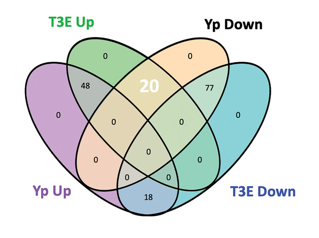
Yersinia pestis actively inhibits the production of extracellular vesicles by human neutrophils
K.R. Sheneman, T.D. Cummins, M.L. Merchant, J.L. Hood, S.M. Uriarte, and M.B. Lawrenz
J Extracell Vesicles. 2025 Apr;14(4):e70074. doi: 10.1002/jev2.70074. PMID: 40240908
We demonstrate that Y. pestis actively inhibits the production of antimicrobial EVs produced by neutrophils, likely contributing to immune evasion.

Draft genome sequences of evolutionary distant Yersinia species representatives
A. Brady, T.M. Garrison, R.K. Ernst, D.A. Rasko, and M.B. Lawrenz
Microbiol Resour Announc. 2024 Dec 10:e0099624. doi: 10.1128/mra.00996-24. PMID: 39655931
We examined 10 diverse isolates representing some of the most understudied subspecies commonly referred to as Yersinia pestis Pestoides. Defining the genetic differences between the Y. pestis Pestoides strains and the strains associated with human plague will help understand the evolution of Y. pestis and the molecular mechanisms that contribute to its acute virulence.
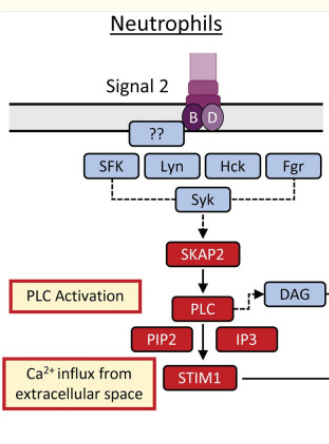
Distinct mechanisms of type 3 secretion system recognition control LTB4 synthesis in neutrophils and macrophages
A. Brady, L.C. Mora Martinez, B. Hammond, K.M. Whitefoot-Keliin, B. Haribabu, S.M. Uriarte, and M.B. Lawrenz
PLoS Pathog. 2024 Oct 18;20(10):e1012651. doi: 10.1371/journal.ppat.1012651. PMID: 39423229
We reveal significant differences in the host factors and signaling pathways required by macrophages and neutrophils to quickly produce LTB4 in response to bacteria. Additionally, we show that Y. pestis has evolved virulence mechanisms to counteract T3SS-dependent LTB4 synthesis by both leukocytes to inhibit LTB4 synthesis and colonize the host.
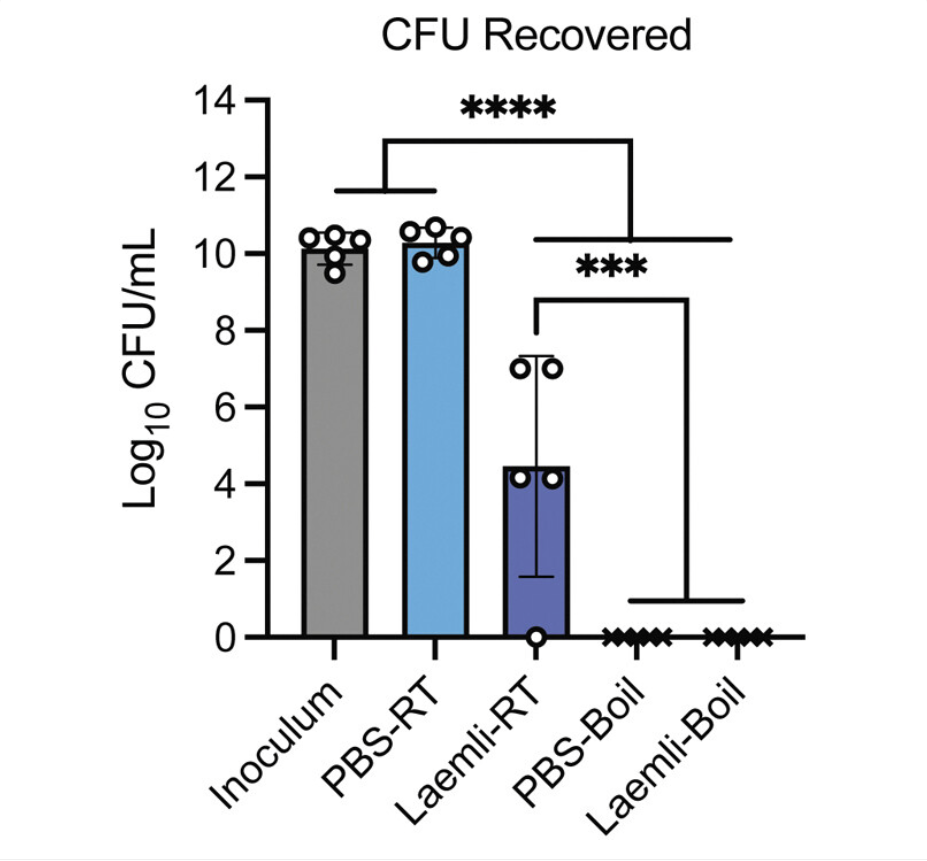
Approaches for the inactivation of Yersinia pestis
A. Brady, M. Tomaszewski, T.M. Garrison, and M.B. Lawrenz
Appl Biosaf. 2024;29(4):221-231. doi:10.1089/apb.2023.0022
We share data demonstrating the complete inactivation of Y. pestis using heat, methanol, and formaldehyde inactivation methods. This study provides data and examples that can be used by other researchers to develop their own in-house validated inactivation protocols for Y. pestis.
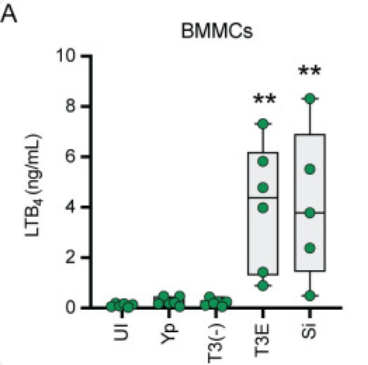
Type 3 secretion system induced leukotriene B4 synthesis by leukocytes is actively inhibited by Yersinia pestis to evade early immune recognition
A. Brady, K.R. Sheneman, A.R. Pulsifer, S.L. Price, T.M. Garrison, K.R. Maddipati, S.R. Bodduluri, J. Pan, N.L. Boyd, J.J. Zheng, S.N. Rai, J. Hellmann, B. Haribabu, S.M. Uriarte, and M.B. Lawrenz
PLoS Pathog. 2024 Jan 25;20(1):e1011280. doi: 10.1371/journal.ppat.1011280. PMID: 38271464
We show that Y. pestis actively inhibits the synthesis of the inflammatory lipid LTB4, contributing to the delay in the inflammatory cascade required for rapid recruitment of leukocytes to sites of infection.
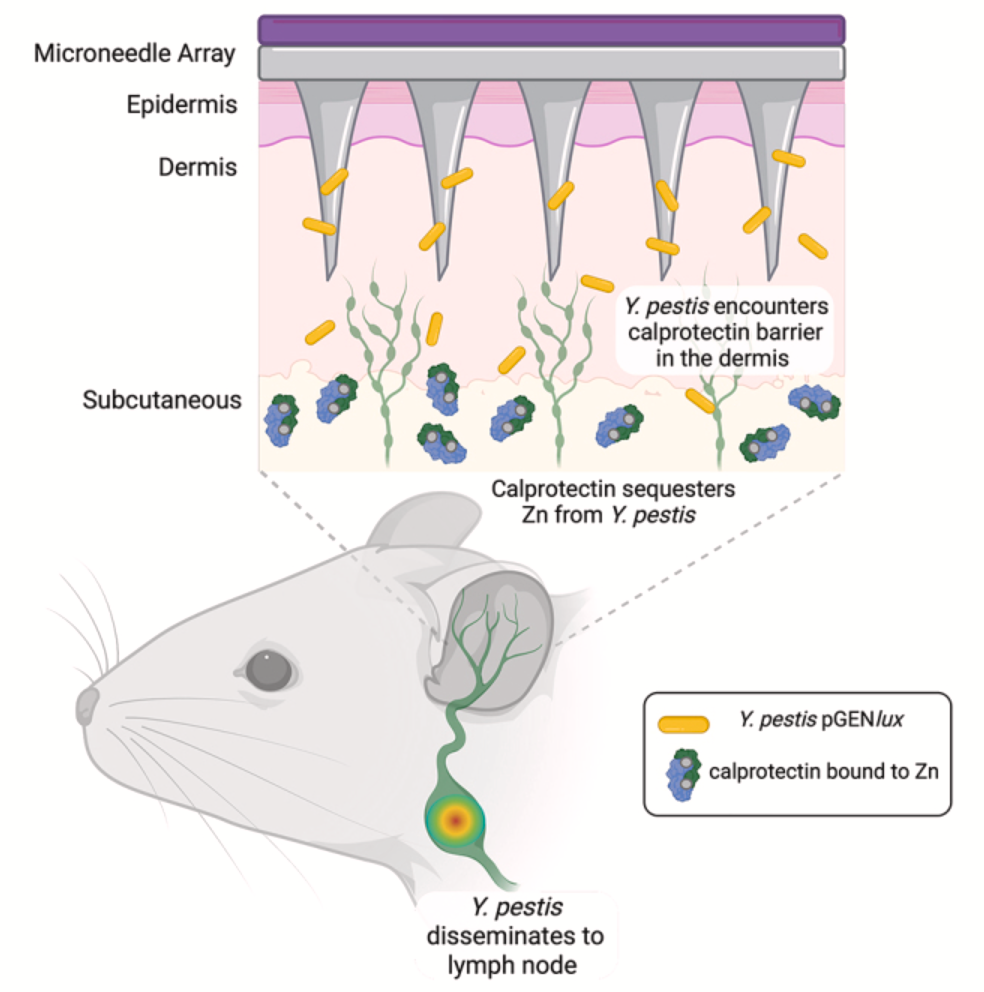
Microneedle array delivery of Yersinia pestis recapitulates bubonic plague
S.L. Price, R.S. Oakes, R. Gonzalez, C. Edwards, J.K. DeMarco, A. Brady, C.M. Jewell, and M.B. Lawrenz
iScience. 2023 Nov 30;27(1):108600. doi: 10.1016/j.isci.2023.108600. PMID: 38179062
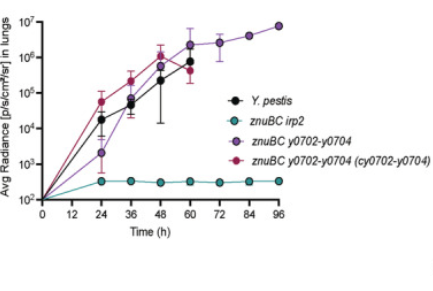
Using microneedle array inoculation to recapitulate bubonic plague, we show that Y. pestis must overcome calprotectin-mediated zinc restriction within the dermis. Furthermore, we demonstrate that dermal delivery of an attenuated mutant has vaccine potential.
Droplet Tn-Seq identifies the primary secretion mechanism for yersiniabactin in Yersinia pestis
S.L. Price, D. Thibault, T.M. Garrison, A. Brady, H. Guo, T.E. Kehl-Fie, S. Garneau-Tsodikova, R.D. Perry, T. van Opijnen, and M.B. Lawrenz
EMBO Rep. 2023 Jul 28:e57369. doi: 10.15252/embr.202357369. PMID: 37501563
We have identified an AcrAB efflux system that secretes yersiniabactin and is required for virulence during bubonic and pneumonic plague. Together these data indicate a potential therapeutic target for bacteria that use yersiniabactin for metal acquisition.
Validated preclinical murine model for therapeutic testing against multidrug resistant Pseudomonas aeruginosa
J.M. Warawa, X. Duan, C.D. Anderson, J.B. Sotsky, D.E. Cramer, T.L. Pfeffer, H. Guo, S. Adcock, S.A. Slone, A.J. Stromberg, A.J. Lepak, D.R. Andes, J.D. Gabbard, W.E. Severson, and M.B. Lawrenz
Microbiol Spectr. 2022 Sep 12; e0269322. PMID: 36094219
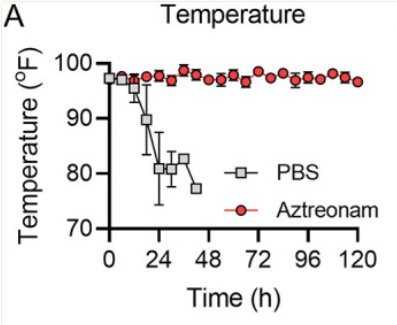
In this paper we describe a robust preclinical model of pulmonary P. aeruginosa infection that can be used to rapidly and accurately predict novel antimicrobial efficacy.
Fluorescent sensors of siderophores produced by bacterial pathogens
A. Kumar, T. Yang, S. Chakravorty, A. Majumdar, B.M. Nairn, D.A. Six, N. Marcondes Dos Santos, S.L. Price, M.B. Lawrenz, L. Actis, M. Marques, T.A. Russo, S.M. Newton, and P.E. Klebba
J Biol Chem. 2022 Jan 28:101651. PMID: 35101443
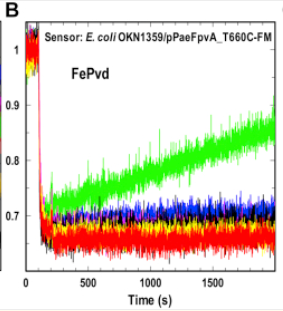
We created 20 sensors that detect, discriminate, and quantify apo- and ferric siderophores. These sensors provide insights into ferric siderophore biosynthesis and uptake pathways in free-living, commensal, and pathogenic Gram-negative bacteria.
Siderophore-mediated zinc acquisition enhances enterobacterial colonization of the inflamed gut
J. Behnsen, H. Zhi, A. Aron, V. Subramanian, W. Santus, M.H. Lee, R.R. Gerner, D. Petras, J.Z. Liu, K.D. Green, S.L. Price, J. Camacho, H. Hillman, J. Tjokrosurjo, N.P. Montaldo, E. Hoover, S. Treacy-Abarca, B.A. Gilston, E.P. Skaar, W.J. Chazin, S. Garneau-Tsodikova, M.B. Lawrenz, R.D. Perry, S. Nuccio, P.C. Dorrestein, and M. Raffatellu
Nat Commun. 2021 Dec 1;12(1):7016. doi: 10.1038/s41467-021-27297-2. PMID: 34853318
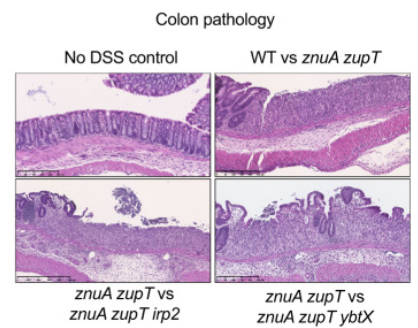
These data indicate that siderophore metal affinity can be influenced by the local environment and reveal a mechanism of zinc acquisition available to commensal and pathogenic Enterobacteriaceae.
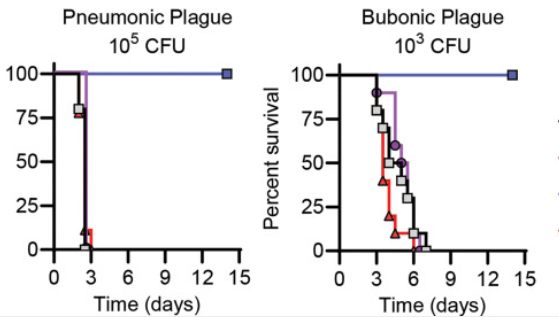
Yersiniabactin contributes to overcoming zinc restriction during Yersinia pestis infection of mammalian and insect hosts
S.L. Price, V. Vadyvaloo, J.K. DeMarco, A. Brady, P.A. Gray, T.E. Kehl-Fie, S. Garneau-Tsodikova, R.D. Perry, and M.B. Lawrenz
Proc Natl Acad Sci U S A. 2021 Nov 2;118(44):e2104073118. doi: 10.1073/pnas.2104073118.PMID: 34716262
In this paper we demonstrate that yersiniabactin is a zinc acquisition mechanism used by Y. pestis to surmount zinc limitation during the infection of both mammalian and insect hosts.